
The Best Fluffy Pancakes recipe you will fall in love with. Full of tips and tricks to help you make the best pancakes.


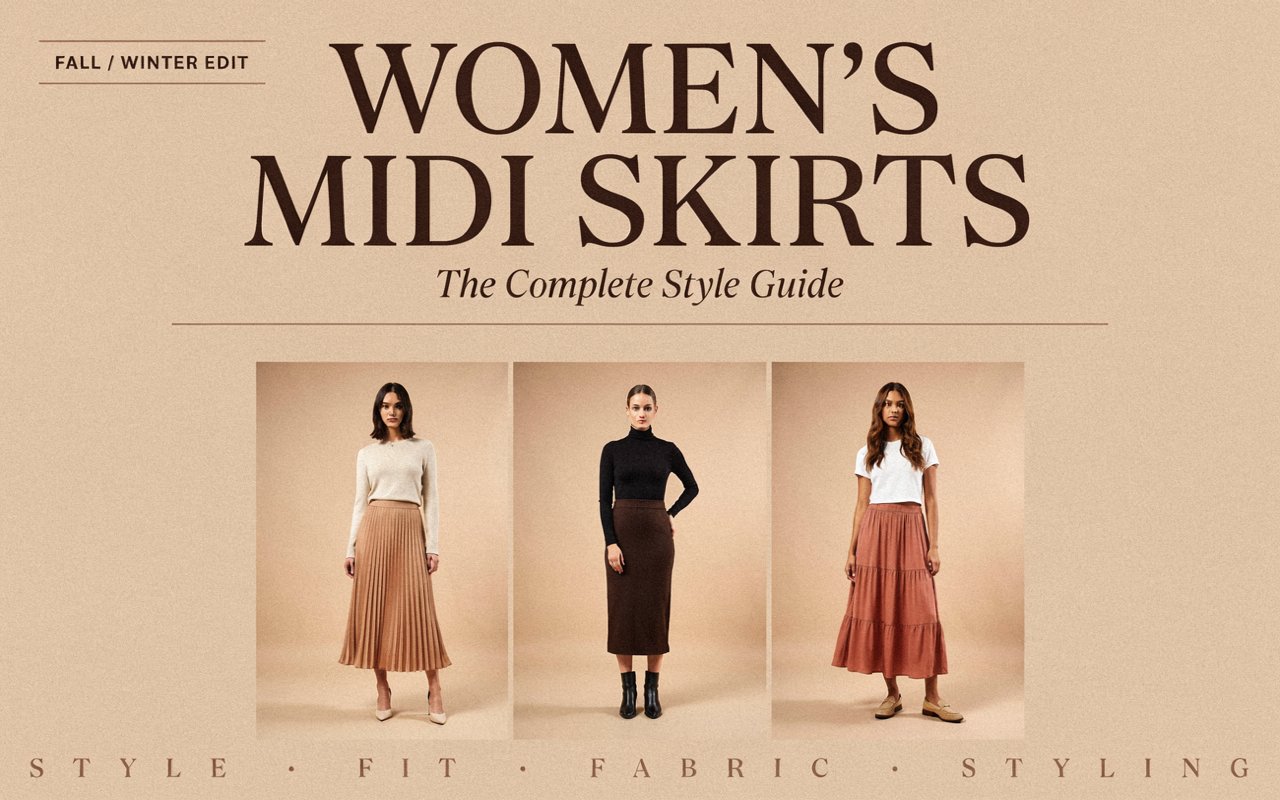
A midi skirt occupies a rare middle ground in a wardrobe: long enough to feel polished and appropriate for nearly any setting, yet short enough to avoid the styling challenges that come with a full-length maxi. It has remained one of the most consistently practical pieces a woman can own, moving easily between the office, weekend errands, and evening events depending on how it’s styled. Pairing one with a cropped shirt is one of the easiest ways to balance the proportions of a longer hemline with a shorter top.
This guide covers the different types of midi skirts worth owning, how to style them for various occasions, and how to choose the right length and fit for your body.
Quick answer: A midi skirt typically falls between the knee and ankle, most commonly mid-calf. It works well for nearly any occasion depending on the fabric and fit, pairing with a fitted top for a balanced silhouette or a looser top for a more relaxed, flowing look.
Why Midi Skirts Remain a Wardrobe Staple
Midi skirts have stayed relevant for years because they solve a proportion problem that shorter and longer hemlines don’t always manage as gracefully. The length flatters a wide range of body types by covering more leg than a mini while still allowing enough movement and visibility to avoid looking overly formal or covered up.
The category has also expanded well beyond a single silhouette, now including everything from structured pencil-style midis to flowing, pleated versions, which means there’s a version suited to nearly any personal style or occasion.
Types of Midi Skirts to Consider
Pencil Midi Skirts
A fitted, straight-cut pencil midi creates a sleek, tailored silhouette and tends to work particularly well for office settings when paired with a structured top or blazer.
A-Line Midi Skirts
The A-line shape flares gently from the waist, offering a flattering, universally wearable option that suits most body types without clinging too closely to the hips or thighs.
Pleated Midi Skirts
Pleats add movement and texture, making this style a popular choice for both casual and slightly dressier occasions, since the pleating itself does much of the visual work.
Wrap Midi Skirts
A wrap-style midi ties at the waist for an adjustable fit, offering some of the same flexibility as a wrap dress while keeping the silhouette more casual. This adjustability also makes it a practical option for anyone whose weight or fit needs fluctuate slightly over time.
Slip Midi Skirts
A silky, bias-cut slip skirt has become a popular choice for both daytime and evening wear, offering a slightly dressier alternative to more structured cotton or denim midi styles.
Denim Midi Skirts
A denim midi offers a casual, durable option that pairs easily with almost anything in a closet, from simple tees to more fitted knit tops, making it one of the more versatile everyday choices in this category.
How to Style Midi Skirts for Different Occasions
For the Office
A pencil or A-line midi skirt paired with a fitted blouse and blazer creates a polished, professional silhouette. Choosing a structured fabric over something too flowy helps maintain a business-appropriate look.
For Casual Daytime Wear
A relaxed A-line or wrap midi skirt paired with a simple tee and sneakers keeps the look casual without feeling underdressed, particularly for errands or weekend outings.
For Evening Events
A slip midi skirt in silk or satin, paired with heels and a fitted top, works well for dinners or evening occasions without requiring a full dress.
For Layering in Cooler Weather
A midi skirt paired with tights, boots, and a sweater or coat extends the wearability of the style well into colder months, when a shorter hemline might otherwise feel impractical.
Choosing the Right Length and Fit
Not all midi skirts hit at the same point, and small differences in length can significantly change how a skirt reads on different body types. If you’re altering a skirt yourself, learning the basics of hemming makes it much easier to adjust a length that’s close but not quite right, rather than passing on an otherwise great skirt.
- Petite frame: A slightly shorter midi, hitting just below the knee, tends to avoid overwhelming a smaller frame compared to a longer, ankle-grazing length
- Taller frame: A longer midi, closer to the ankle, tends to look proportionate and avoids appearing too short relative to overall height
- Curvier figures: An A-line or wrap silhouette balances proportions without clinging too tightly through the hips
- Straighter frame: A pencil midi or a skirt with pleating adds shape and visual interest to a straighter silhouette
Common Mistakes to Avoid
- Choosing the wrong length for your height: A midi skirt that hits at an awkward point, neither flattering nor intentional, is one of the most common fit issues. Trying a skirt on and adjusting the hemline if needed makes a noticeable difference.
- Pairing with the wrong shoe: Flat shoes can sometimes shorten the visual line of a midi skirt, while a heel or a shoe with some structure tends to elongate the silhouette
- Ignoring waist definition: A midi skirt without a defined waistline, paired with an equally loose top, can look shapeless. Tucking in a top or adding a belt helps create structure
- Overlooking fabric weight for the season: A heavy fabric can feel out of place in summer, while a lightweight fabric may not hold its shape as well in colder months
- Assuming one silhouette suits every occasion: A pencil midi that works perfectly for the office may feel too restrictive for a full day of walking or travel, so matching the silhouette to the activity matters as much as matching it to the dress code
Frequently Asked Questions
What length is considered a midi skirt?
A midi skirt typically falls between the knee and ankle, most commonly hitting somewhere around mid-calf, though the exact length varies by brand and style.
Are midi skirts flattering for short women?
Yes, particularly when the hemline hits just below the knee rather than closer to the ankle, which helps avoid overwhelming a shorter frame.
Can midi skirts be worn in winter?
Yes, pairing a midi skirt with tights, boots, and a sweater or coat makes it practical for colder months, extending its wearability well beyond warm weather.
What tops pair best with a midi skirt?
A fitted or tucked-in top tends to create the most balanced silhouette, especially with fuller or A-line midi styles, though a looser top can work well with a more fitted pencil skirt.
Are midi skirts appropriate for the office?
Yes, particularly pencil or A-line styles in structured fabrics, paired with a blazer or fitted top for a polished, professional look.
What fabric works best for a midi skirt in summer?
Lightweight cotton or linen tends to work best for warm weather, since it stays breathable while still holding enough shape to avoid clinging in the heat.
Final Thoughts
A midi skirt earns its place as a wardrobe staple by offering a length that works across nearly every occasion and season, from a tailored pencil style for the office to a flowing pleated version for the weekend. Paying attention to how the hemline hits your height and choosing the right silhouette for your body type makes the biggest difference in how polished the final look feels. A well-chosen midi skirt, much like a good matching set or a versatile blazer, tends to earn its place in a closet by working far harder than any single trend-driven piece could.