
The Best Fluffy Pancakes recipe you will fall in love with. Full of tips and tricks to help you make the best pancakes.


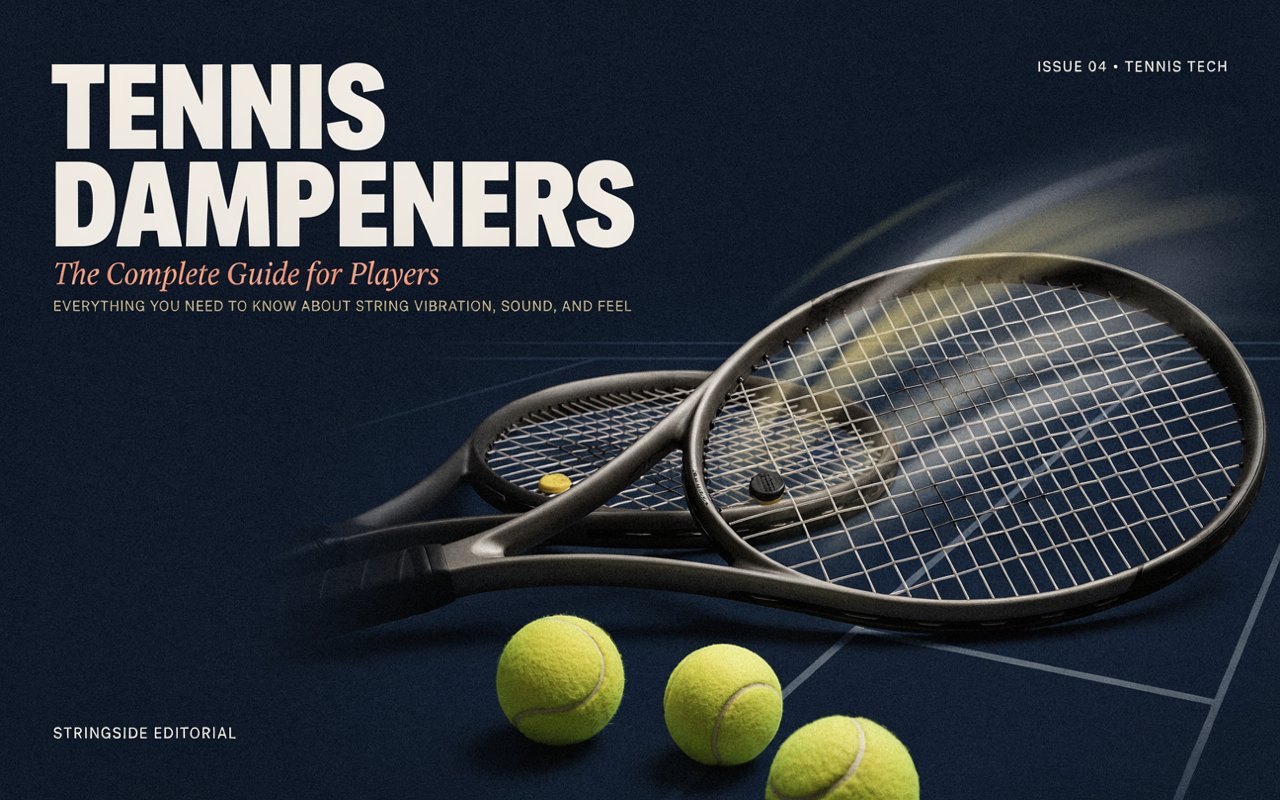
That sharp, metallic ping some rackets make on contact is not just an annoying sound. For many players, it is also a distraction that pulls focus away from the shot itself. A small piece of rubber or silicone tucked into the racket’s strings, known as a dampener, is designed to soften that sound and change the feel of each hit, even though its actual effect on performance is more subtle than many players expect.
This guide covers what a tennis dampener actually does, the different types available, and how to decide whether adding one to your racket makes sense for your game.
Quick answer: A tennis dampener is a small rubber or silicone accessory placed within a racket’s strings to reduce vibration and soften the sound on contact. While it changes the feel and noise of each shot, it has minimal impact on power, spin, or overall performance.
What a Tennis Dampener Actually Does
A dampener sits between two of the main strings near the bottom of the string bed, absorbing some of the vibration that travels through the racket after the ball makes contact. This reduces both the sharp sound of the hit and the sensation of vibration felt in the hand and arm.
It is worth noting that dampeners do not meaningfully reduce the risk of tennis elbow or similar injuries, despite this being a common assumption. Most of the vibration that contributes to arm strain occurs at frequencies a small string dampener cannot fully absorb. Its primary effect is on sound and feel rather than injury prevention.
Types of Tennis Dampeners
Button or Disc Dampeners
The most common style, button dampeners are small, round pieces of rubber or silicone that snap between two strings near the bottom of the racket head. These are simple to install and remove, making them a popular choice for players who like to experiment with using one or going without.
Worm or String Dampeners
Worm-style dampeners are longer, thinner pieces that weave through multiple strings rather than sitting in a single spot. Some players find these offer a slightly different feel and sound compared to a button dampener, though the overall function remains similar.
Novelty and Character Dampeners
Many dampeners are designed with decorative shapes, characters, or brand logos, offering a way to personalize a racket’s appearance. These function the same as standard button dampeners, with the added element of personal style.
Dual or Multi-Dampener Setups
Some players choose to use two dampeners at once, typically to further soften sound and vibration. This is largely a matter of personal preference, since the added performance effect beyond a single dampener is minimal.
How to Choose a Tennis Dampener
- If sound bothers you most: A standard button dampener typically provides enough noise reduction for most players
- If you want a personalized touch: Novelty or character dampeners offer the same function with more visual variety
- If you prefer a different feel: Worm-style dampeners are worth trying if a standard button dampener does not feel quite right
- If you are unsure whether you want one at all: Playing a few sessions without a dampener, then adding one, is the easiest way to notice the difference in sound and feel firsthand
How to Install a Tennis Dampener
- Locate the two strings near the bottom of the racket head, just above the throat of the racket
- For a button dampener, stretch the rubber slightly and snap it between the two selected strings, making sure it sits securely and does not slide
- For a worm-style dampener, weave the piece through several strings, adjusting until it sits flat and stays in place
- Double check that the dampener does not interfere with the natural motion of the strings during play, since one placed too tightly can restrict string movement
Dampeners are inexpensive and easy to swap out, so trying a couple of styles before settling on a preference is common among players who are particular about feel.
Do Dampeners Affect Performance
The short answer is very little. Most players and equipment experts agree that dampeners have a negligible effect on power, spin, or ball speed. Their primary function is changing the sound and vibration felt on contact, which is more about comfort and personal preference than actual performance gain.
Some players choose to skip a dampener entirely, preferring the natural sound and feel of strings without one. This is a matter of personal taste rather than a performance decision either way.
Dampeners and Your Overall Racket Setup
A dampener is a small piece of a much larger equipment picture. Pairing it with a properly maintained grip makes a bigger overall difference in comfort and control during play. Our guide to tennis overgrips covers how grip choice and upkeep affects feel in a way that has a more noticeable impact than a dampener alone.
Common Mistakes to Avoid With Dampeners
- Expecting injury prevention: Dampeners primarily affect sound and feel, not the vibration frequencies most associated with tennis elbow or arm strain
- Installing it too tightly: A dampener wedged too firmly between strings can restrict natural string movement, which may slightly affect feel during play
- Assuming it changes performance significantly: Since the effect on power and spin is minimal, choosing a dampener based on comfort and sound preference makes more sense than expecting a performance boost
- Losing it without a backup: Since dampeners are small and easily fall out during play, keeping a spare in your bag prevents having to play without one unexpectedly
Frequently Asked Questions
Do tennis dampeners reduce the risk of tennis elbow?
Not significantly. While dampeners reduce some surface vibration and sound, they have minimal effect on the vibration frequencies most associated with tennis elbow and similar arm strain.
Does a dampener affect how hard or fast I can hit the ball?
No, dampeners have a negligible effect on power, spin, or ball speed. Their main function is reducing sound and the sensation of vibration on contact.
How do I know if my dampener is installed correctly?
A properly installed dampener sits securely between two strings without sliding or falling out, and does not visibly restrict the natural movement of the surrounding strings.
Can I play tennis without a dampener?
Yes, many players choose not to use one at all. It is entirely a matter of personal preference regarding sound and feel, rather than a requirement for play.
Do all tennis rackets need the same size dampener?
Most dampeners are designed to fit a standard range of string spacing found on most rackets, though it is worth checking that a dampener fits securely on your specific racket before relying on it during a match.
Final Thoughts
A tennis dampener is a small, inexpensive way to change how a racket sounds and feels on contact, even though its effect on actual performance is minimal. Whether you choose a simple button style, a decorative option, or skip one entirely, it ultimately comes down to personal comfort and preference rather than any measurable competitive advantage.