The Best Fluffy Pancakes recipe you will fall in love with. Full of tips and tricks to help you make the best pancakes.


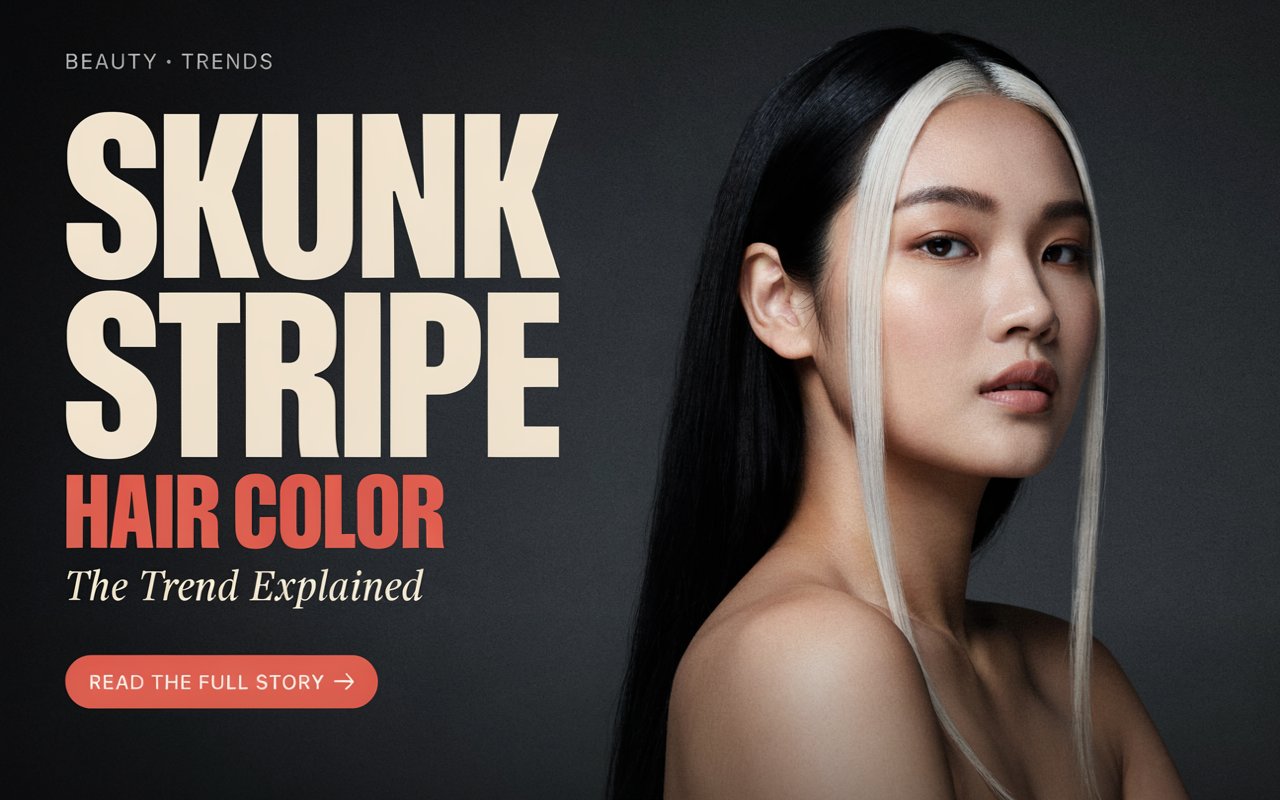
A single, bold streak of contrasting color running through an otherwise dark base has become one of the more unexpected hair trends to gain real staying power. Often called “skunk stripe” or “skunk hair” for its resemblance to the animal’s signature marking, the look trades the soft, blended dimension of balayage for something far more graphic and intentional. If you’re comparing it against other contrast-based color options, our guide to black vs dark brown hair covers the base shades that typically anchor this look.
This guide covers what a skunk stripe actually is, how it’s achieved, who it tends to suit, and how to maintain the contrast between salon visits.
Quick answer: A skunk stripe is a single, bold section of light hair, usually blonde or white, set against a dark base color, most commonly positioned at the front or center part. Unlike traditional highlights, which are distributed throughout the hair, a skunk stripe is deliberately concentrated in one visible section for maximum contrast.
What a Skunk Stripe Hair Color Actually Is
Unlike balayage or traditional highlights, which distribute lighter pieces throughout the hair for a blended, dimensional effect, a skunk stripe concentrates all of the contrast into one deliberate section. This is typically placed at the front of the hairline or along the center part, creating a bold, graphic line rather than a soft transition.
The technique itself isn’t new. Dramatic, concentrated color placement has appeared in various forms for decades, but the current version has been refined into a cleaner, more precise look, often achieved with careful foiling to keep the stripe crisp rather than diffuse. Precision is really what separates a well-done skunk stripe from a result that reads as uneven or accidental.
Why the Skunk Stripe Trend Has Taken Off
Part of the appeal is how much visual impact a single section of color can create compared to full-head highlighting. It requires less overall lightening than a full balayage or highlight service, since only one targeted area is processed, which can mean less overall damage to the rest of the hair.
It also offers a distinctive, editorial look that stands out from the softer, more blended color trends that have dominated in recent years, appealing to anyone looking for something bolder and more graphic. Social media has played a role too, since the high-contrast stripe photographs and films distinctly, making it easy to recognize even in a quick scroll.
Who the Skunk Stripe Suits Best
- Dark hair bases: The contrast reads most dramatically against black or deep brown hair, where the lightened section stands out clearly
- Straight or sleek styles: A skunk stripe tends to show most clearly when hair is worn straight or in styles that keep the stripe visible, such as a center part or slicked-back look
- Shorter to medium lengths: While it can work on longer hair too, shorter and medium lengths tend to showcase the stripe with less chance of it disappearing into layers or movement
- Anyone wanting a lower-commitment bold look: Compared to fully lightening the hair, a single stripe offers a more contained way to experiment with dramatic contrast
How to Achieve a Skunk Stripe at the Salon
Getting a clean, well-placed skunk stripe requires precise sectioning and placement, which is generally best left to a professional colorist rather than attempted at home.
- The colorist sections off a defined piece of hair, typically at the front or along the part, isolating it from the rest of the hair
- The isolated section is lightened, often requiring bleach to lift dark hair to a pale enough base for the contrast to read clearly
- A toner is applied to the lightened section to achieve the desired final shade, whether that’s a cool platinum, warm blonde, or another specific tone
- The surrounding hair remains untouched, preserving the natural or previously colored base for maximum contrast against the new stripe
Maintaining a Skunk Stripe Between Salon Visits
Because the stripe is isolated rather than blended throughout the hair, regrowth at the root of that specific section can become noticeable more quickly than with softer techniques like balayage. Spacing out washes and using cooler water both help extend the life of the lightened section and the tone applied to it.
- Use a purple or toning shampoo periodically to keep the lightened stripe from developing unwanted warmth
- Deep condition regularly, since the lightened section has likely undergone more processing than the rest of the hair
- Touch up the root of the stripe as needed, generally every 6 to 10 weeks depending on hair growth rate
- Use a heat protectant consistently, since the lightened section is typically more vulnerable to heat damage than untreated hair
Common Mistakes to Avoid
- Attempting it at home without experience: Precise placement and controlled lightening are difficult to achieve without professional tools and training, and uneven results are hard to fix without further processing
- Choosing the wrong placement for your part: A stripe positioned without considering how you naturally part your hair can end up hidden rather than visible day to day
- Skipping bond-building treatments: Since the stripe typically requires significant lightening, skipping strengthening treatments during the process can leave that section more prone to breakage
- Underestimating root maintenance: The isolated nature of the stripe means regrowth can look more obviously uneven than with blended highlighting techniques
- Going too light too fast: Attempting to reach a very pale or white stripe in a single session on dark hair can be harsh on the hair’s structure, so some colorists recommend reaching the desired shade gradually over multiple appointments
Frequently Asked Questions
Does a skunk stripe work on all hair colors?
It’s most dramatic on dark hair bases, like black or deep brown, since the contrast against a lightened section reads most clearly. It can be done on lighter bases too, though the visual effect is less striking.
How often does a skunk stripe need to be touched up?
Typically every 6 to 10 weeks, depending on hair growth rate and how much root contrast you’re comfortable with before a touch-up feels necessary.
Is a skunk stripe more damaging than regular highlights?
It depends on the technique, but because the stripe often requires significant lightening in one concentrated section, that area can experience more processing than hair treated with more gradual highlighting methods.
Can I remove a skunk stripe if I change my mind?
Yes, though returning the lightened section to match the rest of your hair usually requires additional coloring, since simply growing it out will leave a visible line until the section is fully trimmed away.
What hairstyles show off a skunk stripe best?
Straight styles, center parts, and slicked-back looks tend to display the stripe most clearly, since these keep the contrast visible rather than blending it into loose waves or curls.
Will a skunk stripe suit curly hair?
It can, though the effect tends to look different than on straight hair, since curls disperse the stripe throughout the pattern rather than keeping it as one continuous line. Some people prefer this softer, more diffused version of the look.
Final Thoughts
The skunk stripe trend offers a bold, graphic alternative to the softer, blended color techniques that have dominated in recent years. Because the look relies on precise placement and often significant lightening in one section, working with an experienced colorist and staying on top of root maintenance are both essential to keeping the contrast looking sharp and intentional rather than accidental. For anyone hesitant to commit to a full head of contrast, it remains one of the more approachable ways to try a genuinely striking hair color change.